By Elisabeth Saftiuk, Acting President and CEO, Manitoba Chambers of Commerce
Agriculture has long been one of the foundations of Manitoba’s economy and a significant contributor to Canada’s economic prosperity. Its impact extends well beyond the farm gate, supporting food processing, manufacturing, transportation, research, innovation and employment across the province.
Canada has earned an international reputation for producing high-quality agricultural commodities. But as global competition intensifies and trade relationships evolve, we have an opportunity to think more ambitiously about the future of our agri-food sector.
The opportunity is not simply to grow and export more. It is to capture more of the value of what we grow.
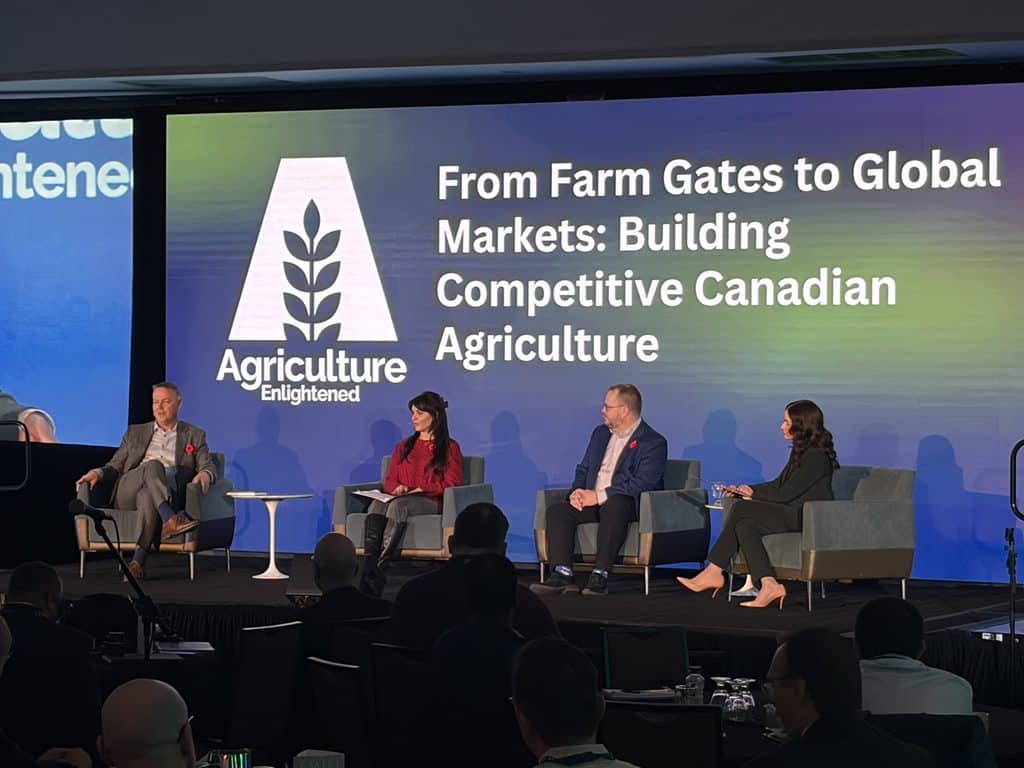
This theme was central to a panel discussion I had the pleasure of moderating at EMILI’s Agriculture Enlightened conference in Winnipeg on November 5. It also connects closely with the Winter 2026 edition of MBiz Magazine, which explores Manitoba’s competitive advantages, including the innovation and technology transforming our agricultural sector.
Our discussion, From Farm Gates to Global Markets: Building Competitive Canadian Agriculture, brought together Tyler Groeneveld, Chief Executive Officer of Protein Industries Canada; Leif Carlson, Vice President, Markets and Trade at Cereals Canada; and Hailey Jefferies, Founder of Prairie Fava.
Together, they offered valuable perspectives on expanding domestic processing, developing international markets and creating the conditions for Canadian agri-food businesses to innovate and grow.
Building on Manitoba’s agricultural strengths
One of my strongest takeaways was the depth of the agricultural innovation ecosystem we have here in Manitoba.
Our province brings together producers, processors, researchers, entrepreneurs and industry organizations with the expertise and relationships to develop new products and technologies and compete internationally.
We have considerable strengths in research and innovation. But turning promising ideas into commercially successful businesses requires access to growth capital, infrastructure and markets.
Tyler Groeneveld spoke to the significant economic opportunity associated with expanding Canada’s domestic value-added processing capacity.
A recent report commissioned by Protein Industries Canada and prepared by EY estimated that processing more of our agricultural commodities domestically could contribute an additional $5.4 billion to Canada’s GDP.
Through its work connecting industry partners, advancing innovation and supporting the development of new ingredients and products, Protein Industries Canada is helping demonstrate how Canada can move further up the agricultural value chain.
The opportunity extends beyond producers and processors to manufacturers, technology developers, transportation providers and communities throughout the supply chain.
We have the agricultural resources, research capacity and entrepreneurial talent. We must also create the conditions for businesses to scale.
Strengthening our position in global markets
Canada’s reputation for agricultural quality is a significant competitive advantage, but maintaining and expanding our presence in international markets requires more than a quality product.
Leif Carlson shared insights into Cereals Canada’s work building relationships with international buyers through technical expertise, customer engagement and market development.
Our discussion highlighted the importance of a competitive regulatory environment and reliable supply. International customers need confidence not only in the quality of Canadian products, but in our ability to consistently meet their requirements.
As Canada looks to diversify trade and strengthen its position internationally, these relationships, supported by efficient transportation networks and predictable regulatory processes, will remain essential.
Hailey Jefferies brought an entrepreneur’s perspective through her experience building Prairie Fava, a Manitoba business developing markets for Canadian-grown fava beans and connecting Prairie producers with food manufacturers.
When I asked what she had learned about building demand for an emerging crop and scaling production alongside commercial demand, her answer was wonderfully straightforward: patience, persistence and passion.
Her experience reinforces an important reality: commercializing innovation and establishing new markets takes time, sustained investment and strong relationships across the value chain.
Prairie Fava is an example of the opportunity to transform Canadian-grown commodities into higher-value ingredients and products, creating new economic opportunities here at home.
From innovation to economic growth
Our discussion also reinforced the importance of the federal government’s growing recognition of agriculture and food security as national economic priorities.
The development of a national food security strategy is an encouraging step toward recognizing the strategic importance of Canada’s agri-food sector, not only in feeding Canadians, but in supporting economic growth, international competitiveness and resilience.
But recognizing the opportunity is only the beginning.
Businesses need access to growth capital, research and commercialization support, competitive regulatory processes and the infrastructure required to reach domestic and international markets.
For Manitoba, that means continuing to strengthen the partnerships among industry, research institutions, governments and entrepreneurs that underpin our agricultural innovation ecosystem.
This is also a theme explored in our new MBiz Magazine article, “Agriculture Innovation as Strategic Strength,” which features insights from EMILI CEO Jacqueline Keena and Keystone Agricultural Producers President Jill Verwey on the technologies, research capacity and partnerships shaping the future of Manitoba agriculture.
Their perspectives complement an important message from our panel: innovation creates opportunities, but commercialization, adoption and investment are what turn those opportunities into economic growth.
Capturing more value from what we grow
Canada’s agricultural competitiveness depends on more than what we produce. It depends on our ability to develop higher-value products, commercialize innovation, build lasting relationships with international customers and support businesses as they grow.
For Manitoba, the opportunity is significant. By building on our agricultural strengths and capturing more value from what we grow, we can strengthen domestic supply chains, expand our presence in global markets and create greater economic prosperity across the province.
My sincere thanks to EMILI and Jacqueline Keena for the invitation to moderate this important discussion, and to Tyler Groeneveld, Leif Carlson and Hailey Jefferies for sharing their expertise and experiences. The work being undertaken by Protein Industries Canada, Cereals Canada and Prairie Fava demonstrates both the strength of our agri-food sector and the considerable opportunity ahead.
Canada has long been recognized for what we grow. Our next opportunity is to be equally recognized for the value we create from it.