Manitoba’s approach to helping businesses adopt artificial intelligence is gaining national attention, as chambers of commerce across Canada look to play a greater role in supporting small and medium-sized businesses through technological change.
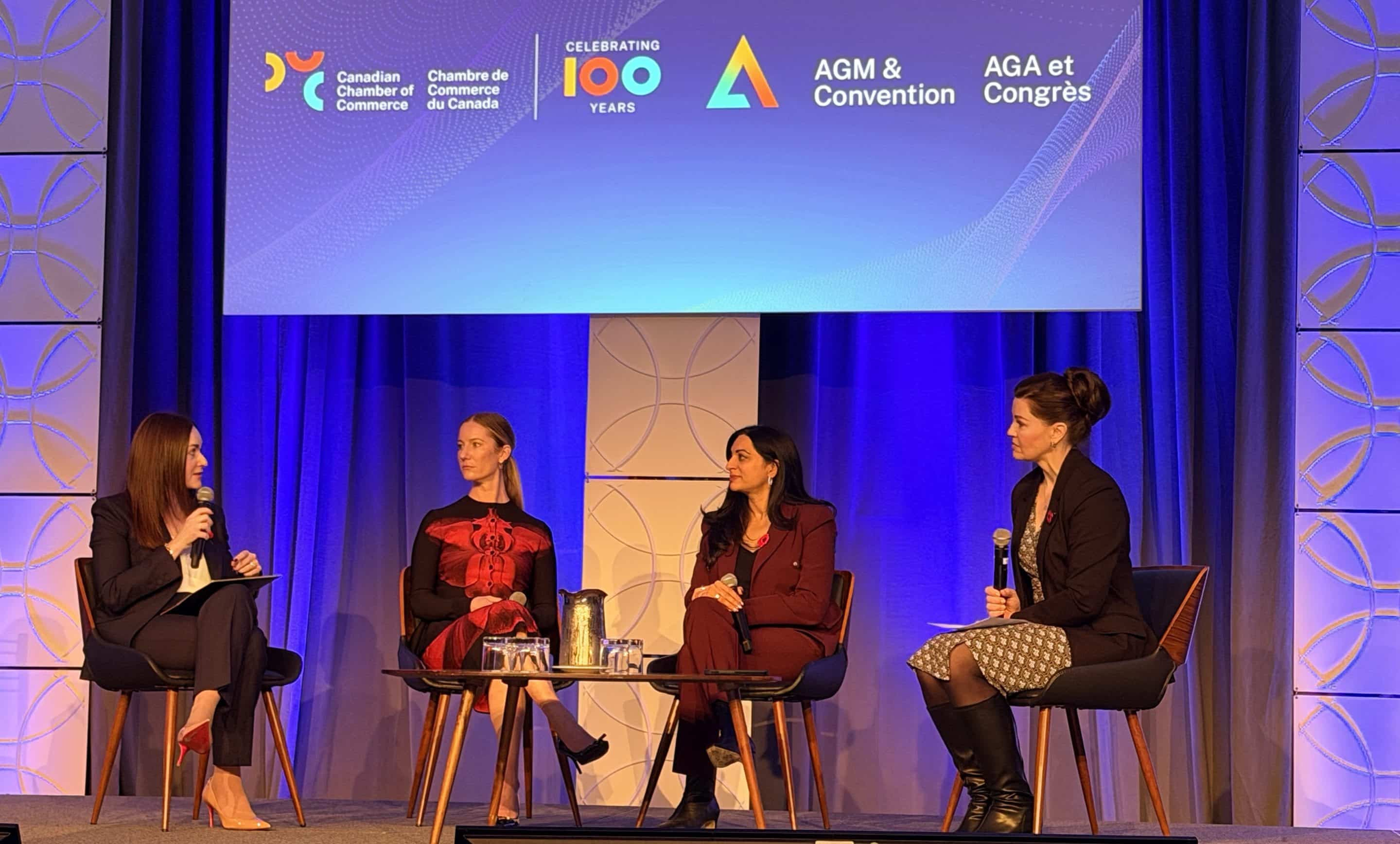
On October 29, the Manitoba Chambers of Commerce (MCC) Acting President and CEO Elisabeth Saftiuk joined leaders from Google Canada, Nrth and the Canadian Chamber of Commerce for a national discussion on how chambers can help businesses harness AI to improve productivity, strengthen competitiveness and support long-term growth.
The panel, held during the Canadian Chamber of Commerce’s annual general meeting in Victoria, coincided with the announcement of a new national AI adoption initiative, supported by more than $2.7 million in funding from Google.org. Beginning in January 2027, the initiative aims to help more than 10,000 Canadian small and medium-sized businesses develop the skills and confidence to use generative AI responsibly.
For Manitoba, the conversation offered an opportunity to share lessons from a program already making a difference for businesses across the province.
From AI Awareness to Practical Application
For approximately five years, the MCC has been helping Manitoba businesses navigate digital transformation, beginning with the Digital Manitoba Initiative and evolving more recently to address the opportunities presented by artificial intelligence.
In October 2025, MCC and The Winnipeg Chamber of Commerce, with funding support from the Government of Manitoba, began rolling out Manitoba AI Pathways, a province-wide initiative designed to help businesses move beyond understanding AI’s potential to identifying practical applications in their day-to-day operations.
The program was developed in response to a familiar challenge facing Manitoba businesses.
Rising operating costs, workforce shortages, skills gaps and economic uncertainty are placing increasing pressure on businesses to find ways to work more efficiently. While AI presents opportunities to improve productivity and reduce administrative burdens, many business owners lack the time, expertise or confidence to know where to begin.
“Businesses are being told they need to adopt AI to remain competitive, but for many, particularly small businesses, it’s one more thing on an already overwhelming list of priorities,” said Saftiuk. “The biggest barrier isn’t necessarily a lack of willingness to embrace technology. It’s knowing where to begin, what questions to ask and which investments will actually make a difference.”
“Our objective isn’t simply to get more businesses using AI. It’s to help them understand where the technology can solve real business problems, support their employees and strengthen their competitiveness.”
Building Capacity Through Manitoba’s Chamber Network
What distinguishes Manitoba AI Pathways is its delivery model, which draws on the trusted relationships and local knowledge of chambers of commerce throughout the province. Rather than relying exclusively on centralized training, MAP has focused on building the capacity of local chambers to support businesses in their own communities.
Through the program, chamber staff, board members and volunteers have received foundational training in AI applications, governance and responsible use. Local chambers then connect businesses with qualified trainers and practical resources, tailoring workshops to the needs of their communities.
The results demonstrate the reach of this approach:
· 26 local chambers have received generative AI training.
· Those local chambers have in turn delivered 29 workshops to businesses in their respective communities, with another 15 planned before the end of January 2027.
· Nearly 800 individuals, representing approximately 500 organizations, have participated in training across Manitoba.
The program also includes an AI Readiness Assessment tool developed in partnership with the Manitoba Association of AI Professionals, helping businesses evaluate their readiness, identify opportunities and determine practical next steps. Businesses can access the assessment at ai-readiness.ca
“Local chambers understand their communities and the challenges facing the businesses they serve,” said Kay Gardiner, MAP Program Director. “By equipping them with the resources, expertise and support to deliver this programming, we’re doing more than helping individual businesses adopt AI. We’re strengthening the capacity of our entire chamber network.”
That local connection is especially valuable in rural and northern Manitoba, where businesses may have fewer opportunities to access specialized training and technical expertise.
Manitoba’s Experience Contributing to a National Conversation
The Canadian Chamber of Commerce’s newly announced initiative reflects growing recognition of the important role chambers can play in helping businesses of all sizes navigate technological change.
MCC Acting President and CEO Elisabeth Saftiuk joined Candace Laing, President and CEO of the Canadian Chamber of Commerce; Natasha Walji, Managing Director of Google Canada; and Lisa Zarzeczny, CEO of Nrth, for a discussion about how chambers can help businesses translate the potential of AI into practical results.
“I want to extend my sincere thanks to the Canadian Chamber of Commerce for the invitation to participate in this important conversation. It was a privilege to join such accomplished leaders and to have the opportunity to share the work we’re doing here in Manitoba,” said Saftiuk.
“I’m incredibly proud of what we’ve accomplished through Manitoba AI Pathways, together with The Winnipeg Chamber of Commerce, our local chamber network and the Government of Manitoba. There is tremendous value in sharing our experiences and learning from one another as we work to help Canadian businesses become more productive and competitive.”
As interest in AI continues to grow across the country, Manitoba’s experience offers valuable lessons about the importance of trusted local relationships, practical training and helping businesses identify opportunities that respond to their specific needs. The message to business leaders is straightforward: Start with the business problem, not the technology.
Identify where employees are spending time on repetitive tasks, where processes could be improved and where additional capacity would make a meaningful difference. Then explore whether AI can help.
Through the continued collaboration of the MCC, The Winnipeg Chamber of Commerce, Manitoba’s local chamber network and the Government of Manitoba, businesses across the province are gaining the tools and confidence to take that next step.
Learn more about Manitoba AI Pathways and opportunities to participate in upcoming training.